How to Make Bagels At Home
↓ Jump to RecipeQuick Answer
This is a hand-crafted bagel recipe that relies on a 24-hour, two-stage fermentation process to develop deep flavor and proper structure. It is designed for home bakers who want to understand the tactile experience of dough-making, involving a "wet" pre-ferment followed by a "dry" ferment, a traditional water boil, and a high-heat bake.
I came home from Bagel Boy and went straight to the kitchen.
Not because I was trying to replicate what they do — you can’t, not really, not without the equipment, the volume, the years of repetition built into every movement. But because spending a full morning watching that process made me want to understand it from the inside. To feel the dough. To work through the steps myself and see what it teaches you when you’re the one doing it.
This is Episode 6 of Dough by Hand. And this one came directly from the source.
The thing that surprised me most about Brendan’s method isn’t the baking — it’s what happens before it. The fermentation happens in two stages, and the distinction matters. A wet ferment first: 200g of flour mixed with 200g of water, left alone for an hour. No yeast yet. Just flour and water beginning to talk to each other, the naturally occurring enzymes starting to break down the starches, laying the groundwork for flavour that a faster dough simply won’t have.
Then the dry ferment: the remaining flour, water, and yeast are added and mixed for around ten minutes until smooth. And then the whole thing goes into the fridge for 24 hours.
Twenty-four hours. That’s the commitment this recipe asks of you. Not in active work — most of it is waiting — but in planning. You have to decide the day before that you want bagels tomorrow. That small act of foresight is part of what makes them taste the way they do.
Shaping is where the work becomes tactile. The dough is divided into portions of around 100g each, rolled into ropes, then wrapped around the hand and pressed together to seal. The ring has to close properly — if the seam is weak, it opens in the boil. You feel quickly when it’s right.
Then back into the fridge, proofing overnight, until the next morning when the real heat starts.
The boil is the step that separates a bagel from everything else. Thirty seconds per side in simmering water — not a rolling boil, not a gentle poach, but something in between. This is what sets the crust, what creates that specific chew, what makes the sesame seeds press in and hold. It’s a short step but it’s not optional. Skip it and you have a bread roll. Do it and you have something else entirely.
Then straight into a 250 degree oven for around twenty minutes, sesame seeds on top, until the crust goes deep and the inside stays dense and soft.
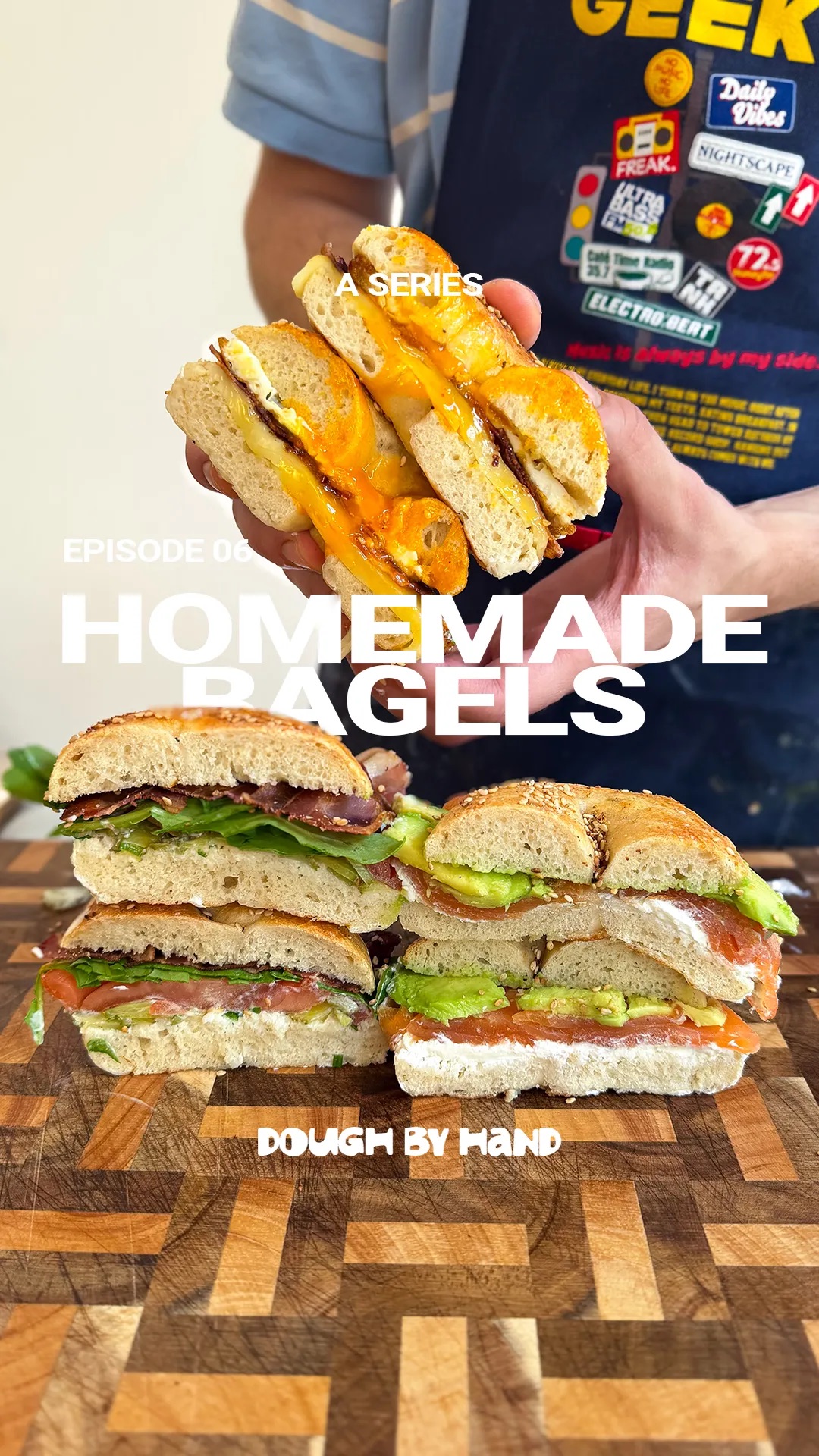
I made a batch and filled them three ways: Philadelphia with avocado and smoked salmon; yogurt with pickles and chives; tomato, arugula, and bacon; bacon, egg, and cheese. Each one worked in its own way. The bagel held up to all of it. That’s how you know the structure is right.
Repetition teaches things that reading about a process never quite can. You start to notice what the dough feels like at each stage — how it changes between the wet ferment and the dry, how the overnight proof tightens it, how the boil transforms the surface from something soft into something that has real tension. These aren’t things you can fully describe. They’re things you accumulate.
I understand now why the people at Bagel Boy do the same movements every day. Not because the work doesn’t require thinking, but because the thinking eventually moves into your hands. The repetition isn’t the absence of skill. It’s where skill lives.
Make these. Give them the time they need. Fill them however you want.
Follow the journey on Instagram:
https://www.instagram.com/thehungrypov/
---
THE RECIPE
BAGELS
Makes approximately 5
INGREDIENTS
500g strong flour
300g water
8g yeast
Sesame seeds
WET FERMENT
Mix 200g of the flour with 200g of the water. Leave to rest for 1 hour.
DRY FERMENT
Add the remaining flour, water, and yeast to the wet ferment. Mix for around 10 minutes until the dough is smooth. Cover and rest.
SHAPING
Divide the dough into balls of around 100g each. Roll each one into a rope, wrap it around your hand, and press the two ends together firmly to seal the ring. Place on a tray, cover, and proof in the fridge for 24 hours.
COOKING
Bring a large pot of water to a gentle boil. Boil each bagel for 30 seconds per side. Transfer to a baking tray, top with sesame seeds, and bake at 250°C for approximately 20 minutes until deep golden.
FILLINGS (suggestions)
Philadelphia, avocado, and smoked salmon
Yogurt, pickles, and chives
Tomato, arugula, and bacon
Bacon, egg, and cheese
If you are having trouble getting this recipe right, ensure you are measuring ingredients accurately. Baking and cooking are sciences, and the right ratios matter. Also, check your oven temperature; many ovens run hot or cold.
Troubleshooting: Why is my Bagels At Home not turning out right?
If you are having trouble getting this recipe right, ensure you are measuring ingredients accurately. Baking and cooking are sciences, and the right ratios matter. Also, check your oven temperature; many ovens run hot or cold.

Loved this recipe?
This recipe was created by The Hungry POV. Check out their profile to book a live cooking class, join their waitlist, or discover more of their signature dishes.
View Chef Profile →